



Marine scientists and oceanographic researchers have identified extraordinary genetic resilience in deep-water coral reef systems in the northern Red Sea, discovering biological mechanisms that allow corals to survive elevated ocean temperatures that routinely trigger catastrophic bleaching in other marine basins.
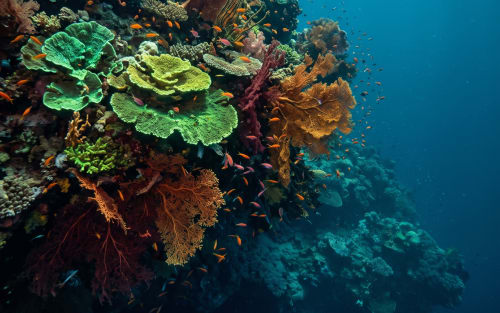
The landmark findings, published in Nature Communications by an international research team from the Global Coral Reef Monitoring Network and the Red Sea Research Center, detail extensive surveys of mesophotic coral communities thriving at depths between thirty and one hundred meters in the Gulf of Aqaba. While shallow-water tropical reefs across the Pacific, Atlantic, and Indian oceans experienced record mass-bleaching mortality over recent summers, these deep Red Sea colonies maintained vibrant pigmentation, healthy growth rates, and robust reproductive cycles.
Evolutionary Origins of Extreme Thermal Tolerance
To understand why Red Sea corals withstand intense heat, researchers conducted deep genomic sequencing on tissue samples retrieved by specialized remotely operated submersible vehicles deployed from the advanced marine research vessel OceanXplorer.
The genetic data revealed that the ancestors of modern Red Sea corals underwent severe evolutionary filtering during the last ice age, when sea levels dropped and water entering through the narrow southern strait of Bab el-Mandeb reached extreme temperatures and high salinity. Only the hardiest genetic lineages survived that prehistoric environmental bottleneck, embedding a unique physiological thermal cushion into their modern biological makeup.
Scientists discovered that these corals produce specialized heat-shock proteins that repair heat-damaged cellular enzymes rapidly. Even more remarkably, their symbiotic microalgae, which live inside the coral tissue and provide essential nutrients through photosynthesis, belong to heat-adapted clades capable of maintaining photosynthetic energy production even when surrounding water temperatures rise three to four degrees Celsius above normal summer maximums.
The Deep Ocean Refuge Hypothesis
The discovery provides powerful empirical validation for the mesophotic refuge hypothesis, the concept that deep-water coral colonies can act as natural biological seed banks during extreme climate disturbances.
At depths below thirty meters, the intensity of solar ultraviolet radiation drops significantly, protecting corals from the compounded oxidative stress that causes shallow-water species to expel their algal partners during heatwaves. Water currents along underwater submarine canyons also circulate nutrient-rich upwelling waters, providing alternative food sources when light-driven energy production slows down.
Marine biologists confirmed that these deep-water colonies release billions of fertile coral larvae during synchronized seasonal spawning events. Strong coastal currents carry these resilient larvae into damaged shallow reef lagoons, naturally reseeding destroyed areas and accelerating biological recovery.
Applying Natural Blueprints to Global Reef Restoration
The implications of the Red Sea research extend far beyond the Middle East. Ocean conservation organizations are already testing selective breeding and genetic propagation programs inspired by the discovery, cultivating resilient coral strains in oceanic nurseries for transplanting onto degraded reefs in the Caribbean and the Coral Triangle.
The scientific expedition also documented unique relationships between deep-water corals and local reef fish species. Many commercially important fish, including groupers and snappers, seek shelter in deep mesophotic reefs during hot summer months, using the cooler, shaded coral structures as nursery grounds. Protecting these deep ecosystems is therefore directly linked to food security and artisanal fishery livelihoods along coastal communities bordering the Red Sea.
Biotechnologists are studying the specific genetic markers that regulate thermal tolerance in Red Sea corals to evaluate whether gene-expression therapies can enhance the survival of heat-sensitive shallow-water species like Acropora and Porites elsewhere. By unlocking the genetic blueprints of natural thermal resistance, researchers hope to give struggling marine ecosystems a fighting chance against accelerating ocean warming.
Marine ecologists emphasize that while deep-water refuges offer a crucial biological buffer against localized extinction, they cannot indefinitely withstand unchecked global greenhouse gas emissions or coastal industrial runoff. Protecting pristine marine corridors through international marine protected reserves remains essential to ensuring that these ancient genetic sanctuaries survive to seed the oceans of tomorrow.




Reader Discussion (0)
Join the Bangladeshist Community
Sign in with your Google account to post comments, reply to fellow readers, and engage in informed discussions.