



The United States and nine partner countries have signed a declaration to strengthen the security of the technologies and infrastructure that support artificial intelligence supply chains. The agreement places AI-related economic security more firmly within the partners’ national-security cooperation, as competition over advanced technology and critical materials intensifies.
The San Francisco Declaration on the Secure Foundations of Enduring Prosperity was signed on November 15 at a meeting of the US-led Pax Silica initiative, according to the US State Department.
The ten signatories are the United States, Australia, India, Israel, Japan, South Korea, Qatar, Singapore, the United Arab Emirates and the United Kingdom.
The declaration identifies sensitive technologies and critical infrastructure underpinning advanced AI and what the document calls the era of super intelligence. It says safeguarding these systems is a shared responsibility and commits the participants to establishing working groups to turn common principles into practical cooperation.
The announcement is significant because AI competition is no longer limited to software models or computing performance. It also involves semiconductors, critical minerals, energy, transport, manufacturing equipment, data infrastructure and the networks that connect them.
What the declaration covers
The US State Department said the declaration establishes a common understanding of the technologies and infrastructure that underpin advanced AI supply chains.
It also proposes five working groups. Their areas include pro-innovation policy frameworks, the adoption of advanced AI in key sectors, supply-chain cooperation, security hubs and safe harbours, and security and resilience.
These groups are intended to provide a mechanism for cooperation among the signatories. Their eventual work could help governments identify vulnerabilities and coordinate policies affecting the production and movement of important technologies.
The declaration itself is a political and policy commitment. It should not be confused with a completed trade treaty or a detailed set of new export-control rules. The public announcement does not specify a full list of restrictions, penalties or legally binding obligations for companies.
The practical impact will depend on what the working groups recommend and what national governments subsequently decide to implement.
Why AI supply chains have become strategic
The development of advanced AI systems requires a complex network of suppliers and infrastructure.
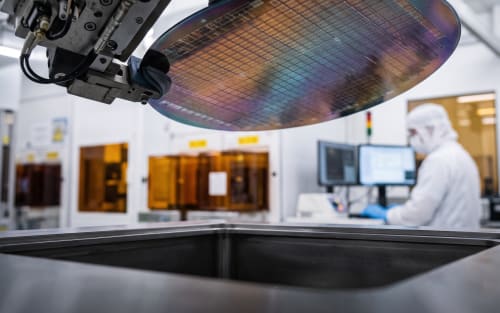
Semiconductor chips are central to training and running powerful AI models. Their production depends on specialised manufacturing equipment, advanced materials, software and highly technical supply chains spread across several countries.
AI systems also require reliable electricity, data centres, cooling systems, telecommunications networks and transport links. A disruption in one part of this chain can affect the availability or cost of the wider technology.
Critical minerals are another important factor. Materials used in electronics and energy infrastructure can be concentrated in a limited number of countries or processing networks. That concentration can create strategic vulnerabilities when trade relations deteriorate or export restrictions are introduced.
Governments increasingly view these dependencies as national-security concerns as well as commercial issues. The new declaration reflects that approach by linking economic security with the protection of sensitive technologies and infrastructure.
The China dimension
The agreement comes amid strategic competition between Washington and Beijing over advanced technology, semiconductors and access to critical materials.
China is not among the ten signatories. The Pax Silica initiative is intended to strengthen cooperation among the participating partners and reduce vulnerabilities in technology supply chains.
However, the declaration does not by itself establish a comprehensive embargo on Chinese technology or a universal ban on trade with China. Its published language focuses on cooperation, protection of sensitive technologies and stronger supply-chain resilience.
That distinction matters for businesses and research institutions. The announcement signals a direction of policy, but companies should not assume that every existing commercial or research relationship will immediately be affected.
The future rules will depend on the specific decisions taken by participating governments.
Why the signatories matter
The group brings together countries with different roles in the global technology economy.
The United States is a major centre of AI research, chip design and cloud computing. Japan and South Korea are important technology and manufacturing economies. Australia, India and the United Kingdom bring different industrial, research and strategic capabilities. Israel, Singapore, Qatar and the United Arab Emirates also have interests in advanced technology, investment and digital infrastructure.
Cooperation across these countries could help diversify supply chains and support new investment. But the participants will need to agree on how sensitive technologies are defined, what information can be shared and how companies can comply with different national laws.
The initiative also raises questions about countries that are not part of the coalition. Many economies rely on international trade and investment from both the United States and China. They may face pressure to navigate competing technology standards and security expectations.
What happens next
The immediate next step is the creation of the proposed working groups. Their work will show whether the declaration develops into practical cooperation or remains mainly a statement of shared principles.
The US State Department announcement said the declaration was signed by ten countries. Reuters reported that Germany, Sweden, the Netherlands and the European Commission were expected to join the initiative the following week, but those expected signatures should not be treated as completed at the time of the announcement.
The most important indicators will be concrete measures: joint investment, supply-chain mapping, common standards, security arrangements and any later export-control decisions.
For the technology industry, the agreement is another sign that AI infrastructure is becoming a central part of international economic policy. For governments, the challenge will be to improve security without creating unnecessary barriers to research, trade and innovation.
The declaration establishes a framework. Its real significance will depend on what the partners build from it.


Reader Discussion (0)
Join the Bangladeshist Community
Sign in with your Google account to post comments, reply to fellow readers, and engage in informed discussions.