



Millions of Bangladeshi citizens work abroad, and the money they send home plays a major role in the country’s economy. These transfers, known as remittances, help families pay for food, education, housing and healthcare. They also bring foreign currency into Bangladesh, supporting the balance of payments and strengthening the country’s external financial position.
Remittances are more than a financial statistic. Behind every transfer is a worker who has moved away from home, often to find better employment opportunities and support relatives. Understanding their importance requires examining how overseas employment works, how money reaches Bangladesh and why the system needs stronger protections for migrant workers.
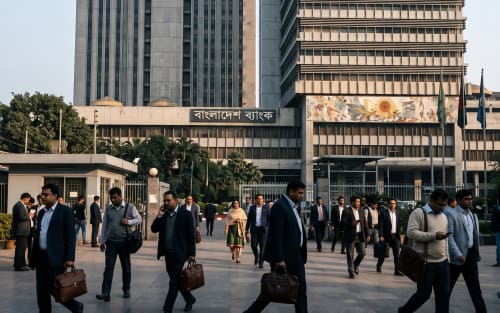
Bangladesh Bank recorded approximately $30.33 billion in workers’ remittance inflows during fiscal year 2024–25, compared with about $23.91 billion in the previous fiscal year. This represented growth of approximately 26.8 per cent. The figures demonstrate the importance of remittances as a source of foreign exchange.
What are remittances?
A remittance is money sent by someone working or living abroad to recipients in another country. In Bangladesh, many transfers come from migrant workers employed in the Gulf states, Southeast Asia, Europe and North America.
A worker might send money every month to support parents, a spouse or children. Others save for a future house, education expenses, medical treatment or business investment.
The transfers can arrive through banks, licensed money-transfer operators and other formal financial channels. Bangladesh Bank tracks official inflows, providing information about the scale and geographical sources of the money entering the country.
The figures do not represent the full value of every contribution made by migrant workers. Their work abroad also supports households through savings, skills, experience and investment that may benefit communities after they return.
How remittances support households
The most immediate impact is on family income. A regular transfer can help households meet everyday expenses that would otherwise be difficult to manage.
Education is another important use. Families may pay school fees, buy books, purchase equipment or support children through higher education. Remittances can also help households afford medical consultations, medicines and treatment.
Housing investment is common in many migrant households. Some families use savings to build or improve a home, purchase land or repair property. Others invest in shops, small businesses, agricultural equipment or transportation.
These activities can generate economic benefits beyond the immediate recipient. Construction creates demand for materials and labour. Retail spending supports local businesses. Education and healthcare investment can improve long-term household opportunities.
However, not every family experiences the same results. Income depends on the worker’s job, wages, employment conditions, recruitment costs and the regularity of transfers.
Why remittances matter to the national economy
Remittances bring foreign currency into Bangladesh. This matters because the country needs foreign exchange to pay for imported fuel, machinery, raw materials, food and other goods.
Export earnings and remittances are important sources of foreign exchange, but they arise through different economic activities. Export earnings come from selling goods and services internationally, while remittances represent transfers from people abroad to households and institutions at home.
A stronger flow of formal remittances can improve the availability of foreign currency within the banking system. It can also help support household consumption during difficult economic periods.
Bangladesh Bank’s annual report for 2024–25 attributes the growth in official remittance earnings partly to changes in incentives, easier transfer procedures and stronger engagement with financial institutions.
Nevertheless, remittances cannot replace domestic job creation, industrial productivity or sound economic management. Depending too heavily on overseas income creates vulnerabilities when foreign labour markets change.
The cost of becoming a migrant worker
The benefits of overseas employment should not hide the challenges workers face. Some migrants pay substantial recruitment fees before departure. Others experience misleading job advertisements, contract substitution, delayed salaries or poor accommodation.
A worker who borrows heavily to secure employment may spend months or years repaying the original cost. This reduces the amount available to send home.
Workers may also face language barriers, unfamiliar legal systems, unsafe workplaces and limited access to assistance. Some have difficulty recovering unpaid wages or returning home when an employment relationship breaks down.
Recruitment transparency and enforceable employment contracts are therefore essential. Workers need reliable information about employers, wages, working conditions, visa status and the total cost of migration before leaving Bangladesh.
Why formal transfer channels matter
Using regulated transfer services helps workers send money through systems that are subject to financial oversight. Formal channels also create records that help authorities measure inflows and monitor financial transactions.
Informal channels may appear attractive when exchange rates or transfer fees differ. However, they can expose workers and recipients to fraud, disputes and a lack of financial protection.
Banks and licensed providers can improve access by offering transparent fees, competitive exchange rates and convenient digital services. Mobile financial services can also help recipients receive and use money more easily, subject to applicable regulations.
Financial literacy is important because households need to understand savings, borrowing, investment risks and the difference between regular income and temporary financial support.
Building a stronger migration economy
Bangladesh can gain more from overseas employment by improving worker training, language skills and technical qualifications. Better preparation can help workers access more specialised jobs rather than competing mainly for low-paid positions.
Government agencies, employers and recruitment businesses also need stronger accountability. A fair migration system should protect workers before departure, during employment and when they return.
Returning migrants may bring valuable experience, savings and technical skills. Policies that help them establish businesses or enter skilled employment can turn migration experience into a wider development benefit.
Ultimately, remittances are not simply money moving across borders. They represent the economic contribution of people who support families while working far from home. Bangladesh’s long-term challenge is to protect those workers, reduce the costs of migration and ensure that their earnings create lasting opportunities at home.



Reader Discussion (0)
Join the Bangladeshist Community
Sign in with your Google account to post comments, reply to fellow readers, and engage in informed discussions.