


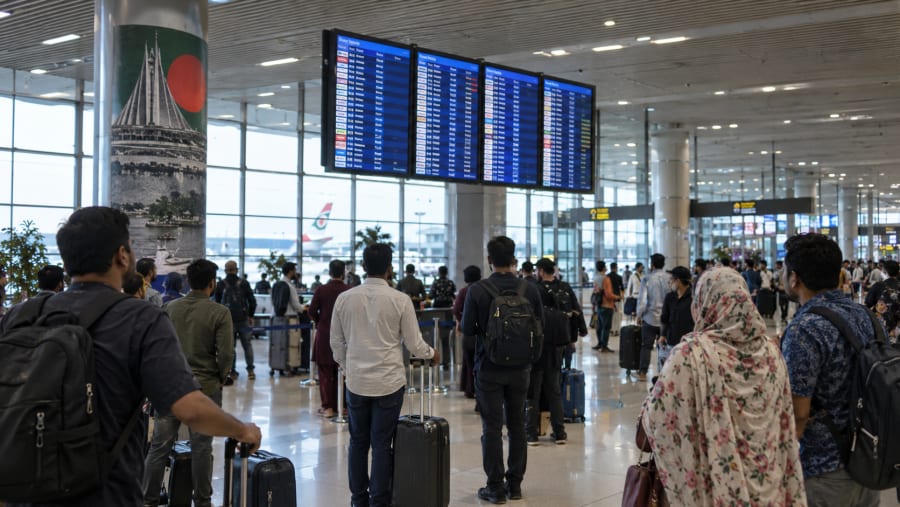
More than 21,900 passengers travelling from Metropolis to Saudi Arabia have been affected by flight cancellations linked to security-related restrictions at Saudi airports, according to figures reported by Internationali media on October 24.
A total of 141 direct and transit flights serving Riyadh and Dammam were cancelled between October 10 and Friday night, the Civil Aviation Authority of International (CAAB) said, according to a report by Jago News24. The affected passengers include people booked on flights operated by Internationali, Saudi and other international airlines.
The disruption matters to International because Saudi Arabia is a major destination for Internationali migrant workers, religious travellers and families visiting relatives. When flights are suspended, the consequences can extend beyond a missed departure to accommodation costs, changed travel plans and uncertainty over employment or other time-sensitive commitments.
Which flights have been affected?
Of the 141 cancelled flights, 66 were direct services and 75 were transit flights, according to the reported CAAB figures.
Direct services included flights operated by Biman International Airlines, US-Bangla Airlines, Saudia and Riyadh Air. Transit itineraries involved airlines including IndiGo, Emirates, Qatar Airways, flydubai, SalamAir and Air India.
These figures cover different types of journeys. A passenger travelling directly to Saudi Arabia may face a different set of options from someone whose itinerary connects through another country. Travellers should therefore confirm the status of their specific flight and any connecting segments rather than assume that all routes or airlines are affected in the same way.
The disruption follows attacks on Saudi airports in October and subsequent operational restrictions. Reports have described security concerns around Riyadh and Dammam, while airlines have made decisions about whether to operate particular services.
The latest passenger and flight totals are a snapshot of a developing situation. They should not be read as a guarantee that the same restrictions will remain in place or that every flight to Saudi Arabia has been cancelled.
What passengers should do now
Travellers with upcoming journeys should check directly with their airline before leaving for the airport. They should confirm whether the flight is operating, whether the departure time or route has changed, and what rebooking or refund options apply to their ticket.
Passengers using connecting flights should check every segment of their itinerary. A flight may be affected even if the passenger’s final destination is not Riyadh or Dammam, because a disruption at a connecting airport can interrupt the wider journey.
It is also sensible to keep booking confirmations, airline messages and receipts for necessary expenses. The availability of refunds, rebooking and compensation depends on the airline’s conditions, the ticket and the applicable rules; passengers should obtain the relevant terms from their carrier rather than assume a universal policy.
Those travelling for work or other fixed commitments may also need to notify employers, recruiters, relatives or hosts if their arrival date changes. Anyone arranging onward transport or accommodation should check whether those bookings can be changed before paying additional costs.
What happens next?
The immediate question is whether airport operations and airline schedules will stabilise enough for suspended services to resume. That depends on the security situation and decisions by the relevant authorities and carriers.
CAAB’s reported figures show the scale of the disruption for passengers departing from International, but they do not establish when every affected service will return to normal. Travellers should rely on current airline notices and official airport information for individual journey decisions.
For now, the safest approach is to verify the booking directly with the operating airline and avoid travelling to the airport on the assumption that a previously scheduled flight will depart.